
Saskatchewan, and Canadian history and genealogy. A poem and an image here and there.
Saturday, 22 February 2025
Meet Dr. MacLean Speaker at Legacy of Leadership: Advancing Sustainability for a Resilient Planet
🌱🌿 Meet Dr. Jason MacLean - Speaker at Legacy of Leadership: Advancing Sustainability for a Resilient Planet 🌿🌱
Dr. Jason MacLean is a passionate environmental scientist, dedicated to advancing sustainability and resilience in agriculture. With a wealth of knowledge in sustainable farming practices, climate change solutions, and ecosystem restoration, his work focuses on creating resilient food systems and driving innovative research for a greener future. 🌍
Dr. Jason MacLean will speak to: How can Canada meet its commitments under the UN Paris Climate Change Agreement and Sustainable Development Goals? This talk outlines the law and policy obstacles and opportunities in Canada today.
Join us on February 23, 2025, at 2:00 PM at The Spot, Market Mall, Saskatoon for an inspiring discussion on how we can work together to build a more sustainable planet. 🌎💚
#EnvironmentalLeadership #Sustainability #ClimateChange #Agroecology #EcosystemRestoration #LegacyOfLeadership #ResilientPlanet #FutureOfFood #ClimateActionChallenge https://stbarbebaker.wordpress.com/2025/02/22/%f0%9f%8c%b1-meet-dr-jason-mclean-a-leading-voice-in-sustainability-and-resilience-%f0%9f%8c%8d/
Meet Prakash Venglat – A Visionary in Plant Biology
🌱🌿 Meet Prakash Venglat – A Visionary in Plant Biology 🌿🌱
Join us for an insightful session at the Legacy of Leadership: Advancing Sustainability for a Resilient Planet event, featuring Prakash Venglat, a renowned plant biologist with over 30 years of experience in agricultural research, biodiversity, and evolutionary biology. 🌾🌍
🔹 Date: February 23, 2025
🔹 Time: 2:00 PM
🔹 Location: The Spot, Market Mall, Saskatoon
Meet the Speaker:
Prakash’s groundbreaking work in plant development, stress biology, and crop improvement has paved the way for sustainable agricultural solutions. As a thought leader in plant genetics, developmental biology, and plant evolution, Prakash is committed to advancing the science that shapes the future of agriculture and biodiversity.
He’ll be sharing his extensive knowledge on topics like:
🌱 Plants have survived on Earth much longer than humans have. We depend on them for food, medicine and many other raw materials. We nurture, consume, enjoy, use, worship, and destroy the plants, but hardly listen to them. Listening to their developmental plasticity tells us wonderful stories of overcoming stress, their adaptive abilities, survival, and finding ways to thrive in new environments.
Don't miss this chance to hear from a leader in the field and engage in a meaningful discussion on how we can build a more sustainable future for our planet! 🌍🌱 https://stbarbebaker.wordpress.com/2025/02/22/meet-the-speaker-prakash-venglat/
#Sustainability #PlantScience #AgricultureInnovation #FutureOfFood #Biodiversity #PrakashVenglat #ResilientPlanet #PlantBiology #EnvironmentalLeadership
Thursday, 15 February 2024
Join us for a day of education, community, and celebration!
🌲✨🌳 Join us for a day of education, community, and celebration! 🌳✨🌲
Concerned citizens from Saskatchewan and beyond are coming together to raise awareness about the alarming increase in clearcutting in our beloved boreal forest. This Saturday, February 17th, the Saskatchewan Forest Protection Network and the Big River Forest Advocates are hosting an impactful Teach-In event, followed by a community supper and a musical Kitchen Party to rally support for a legal action to protect culturally significant and ecologically sensitive areas.
📣 The Teach-In will feature award-winning investigative journalist, Joan Baxter, who will shed light on the history and international impact of Paper Excellence, the company behind numerous mills across Canada.
🌟 Voices from Saskatchewan’s north will include Dave Rondeau, a community archeologist and heritage specialist, Miriam Korner, founder of For Peat’s Sake, and Cathy Sproule, the organizer of our legal action.
🎶 We'll also be treated to the musical talents of local artists Wilma Groenen, Aryn Murray, Raven She Hollers, Frank Klassen (Wrong Johnsons), and the Great Fuss at our Kitchen Party.
It's a family-friendly event with free admission to the Teach-In, food available for purchase at the community supper, and a modest $20 admission fee for the Kitchen Party, with kids getting in free!
🗓 Save the Date:
📅 Saturday, February 17th
🕐 Teach-In: 1:00 PM – 5:00 PM
🍽 Community Supper: 5:30 PM – 7:00 PM
🎵 Kitchen Party & Fundraiser: 7:00 PM – 11:00 PM
📍 St. George’s Senior’s Centre, 1235 20th Street West, Saskatoon
Let's come together to protect our forests and ensure a vibrant future for Saskatchewan and beyond. See you there! 🌿🌎 #SaveOurForests #ForestProtection #CommunityEngagement #TeachIn #SaskatchewanForestProtectionNetwork #BigRiverForestAdvocates #PaperExcellence #Saskatchewan #Saskatoon
https://stbarbebaker.wordpress.com/2024/02/15/concerned-citizens-raising-awareness-about-forest-issues/

Saturday, 11 November 2017
Official and Unofficial Placenames
In Saskatchewan, a dissolved hamlet is an unincorporated or unofficial community of residents that is under the jurisdiction of a rural municipality. These may be referred to at times as Saskatchewan Ghost Towns. What differentiates an unincorporated area from an official or incorporated placename?
According to the Provincial Archives of Saskatchewan, "When asking for incorporation, the Department of Municipal Affairs may historically have lists of petitioners asking the Minister for incorporation: In the case of rural municipalities, each petitioner was required to give the legal land description of his home farm. For urban municipalities, each petitioner had to state an occupation and often provided the legal description of their lot. There also may be special municipal census records outside of and over and above the National census taken every five years. Beginning in 1914, legislation required that a census be taken in hamlets that were petitioning for incorporation as a village. The census included the name and address of every resident." Three of these census are online Duff 1920, Insinger 1921, and for Neudorf 1901
In Saskatchewan, a hamlet is an unincorporated community that is under the jurisdiction of a rural municipality. It has at least five occupied dwellings situated on separate lots and at least 10 separate lots, the majority of which are an average size of less than one acre. The people of an organized hamlet may request that the hamlet be incorporated as a village or resort village. In order to qualify, the hamlet must have been an organized hamlet for at least 3 years, have a population of at least 100 in the most recent census, and contain at least 50 separate dwelling units or business premises. The Government of Saskatchewan recognizes three different types of hamlets – generic "hamlets", "special service areas" and "organized hamlets"
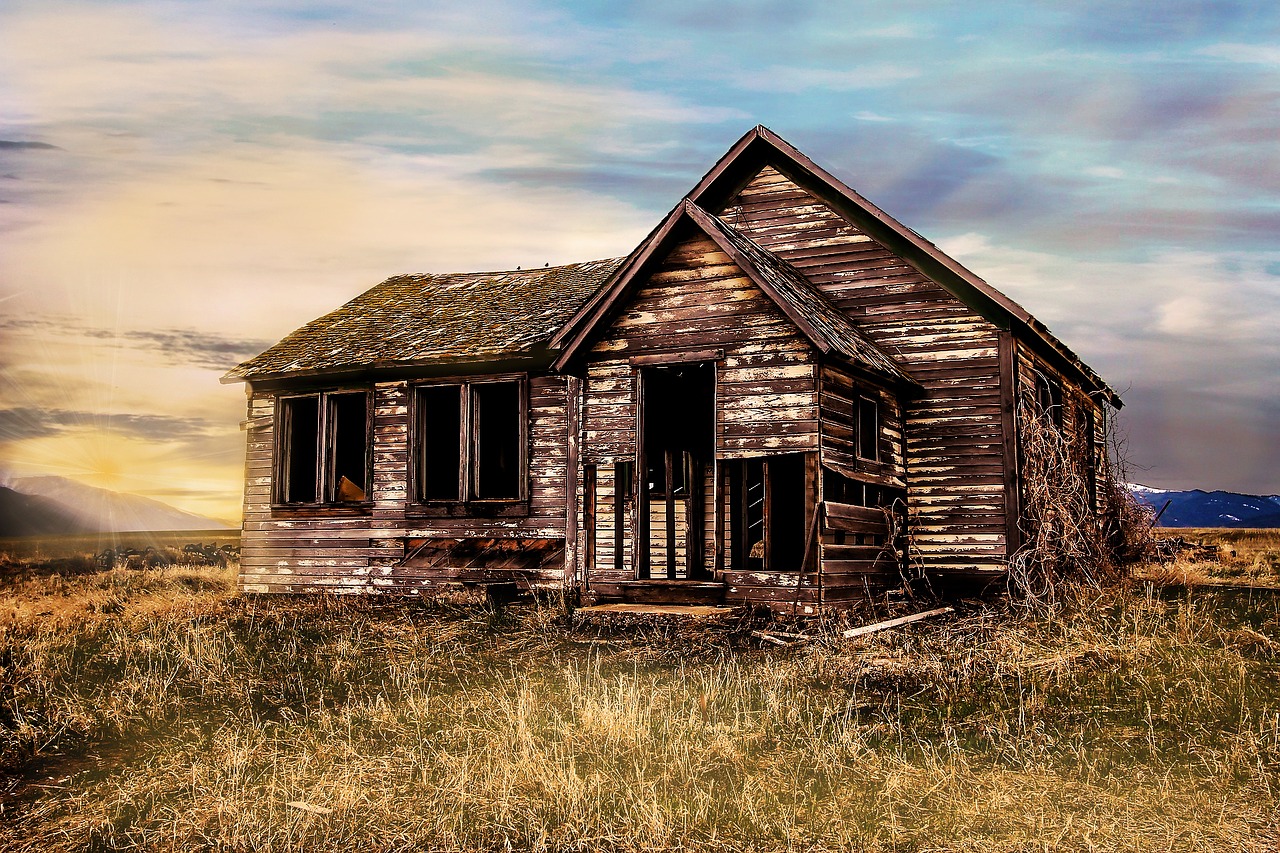 Old Farmhouse
Incorporated villages are those that are self-governing with their own administrative body, and major decisions are voted upon by the people who live there. These villages also provide their own municipal services, such as fire and police. Since setting up these services and administration is time-consuming and costly, villages must have enough taxpayers to afford the expense and effort of being incorporated. Some states and provinces allow villages to incorporate but only provide some of the administrative and municipal services, allowing other services to be supplied by a larger, neighboring town or rural municipality. Following incorporation as a village, the land area has a name and boundaries, and a council is elected with elections Taxes collected go to the new municipality, rather than to the RM council. The RM council has no authority over the village, rather the new bylaws, and local improvements and duties are decided by the village council according to the The Tax Enforcement Act and Municipal Administration guidelines The Government of Saskatchewan incorporation process to establish either a village or resort village from hamlet status which then proceed according to the municipalities act
In Saskatchewan, towns are formed from villages or resort villages with a population of at least 500 people. However towns with populations below the limit may, however, revert to village or resort village status if the town council requests it. In Saskatchewan, towns must have a population above 5,000 in order to be granted city status. Another municipality in Saskatchewan is a rural municipality (RM) is created by the Minister of Municipal Affairs by ministerial order via section 49 of The Municipalities Act. According to the Saskatchewan Association of Rural Municipalities,
"In 1883, the federal government gave the legislative council of the North West Territories the authority to make laws respecting local government. .... Those areas that did not form municipalities were organized as Local Improvement Districts (LID's) and, Statute Labour and Fire (SLF) Districts." Historically it was found that a failure of the LID and SLF larger than the 36 square kilometers originally allocated for RM administration was a bit hard to maintain during the era of horse and buggy.
"in 1905, the provincial government established the Spencer Commission to develop a standard framework for local government organization. This was in response to the increasing demands being placed upon local councils by the seemingly endless influx of settlers. By 1907, the Commission had held meetings throughout the province at which it solicited the opinion of the people as to: what responsibilities and authority local councils should have; how large rural municipalities should be; how many councillors were required in each rural municipality; and how often elections should be held, among other things."SARM The Spencer Commission resulted in ..... "The first legislation specifying the powers of rural municipalities, towns, villages and cities in Saskatchewan was passed in 1909. " Municipal Council Member’s Handbook Saskatchewan Ministry of Municipal Affairs
An RM may have its office in a town or village, which has its own separate and distinct civic administration, but the RM administers the rural affairs of a large land area including rural residents, unincorporated areas or ghost towns. The RM administers the remaining population of the ghost town providing any needed civic infrastructure, safety, health, educational, or tourism affairs. Localities with small populations are enumerated in census taking by Statistics Canada as a population belonging to the RM. Historically an RM began as a SLF when the fear of grass fires threatened the lives and livelihood of local homesteaders of Saskatchewan. These Fire Districts became known as Local Improvement Districts LID. LIDs were exactly that - seeking to improve the local community, establishing cemeteries, honouring war dead, providing health care, roads, bridges. Later LIDs were seen as very large areas, and the concept of the Rural Municipality began which started out as nine townships, or administering an area six miles by six miles in area, which could more readily serve the rural population with administrative and infrastructure services such as education, telephone, water, sewer, recreation, lighting in addition to the services of the Fire District and LID.
Unincorporated communities include hamlets and organized hamlets within rural municipalities and northern settlements within the Northern Saskatchewan Administration District NSAD. Unincorporated communities In land law, an unincorporated community is a populated place that is not within any incorporated municipality, but are within the jurisdiction of a rural municipality, county or other political subdivision. Residents in an unincorporated community pay taxes to the RM, and rely on the RM, reeve and councillors for the bylaws, administrative decisions, infrastructure, and emergency services such as fire and police and the like. Though some incorporated communities do have emergency services shared or supplied by a larger town or RM.
When incorporated, a collective group of residents in the community have a little more control over their local neck of the woods. According to the 2016 census of population just recently released, a determination can be made about the status of placenames whether they are official or unofficial, hamlet, village, town, city or rural municipality.
Here is an example of Watson incorporating from a village to a town.
Dunblane is an example of a community which incorporated as a village in 1916, and then when population dwindled, the village officially disorganised in 1975 - or became an unincorporated or unofficial area.
"We are addresses in ghost towns. We are old wishes that never came true." Pete WentzRural areas or sparsely populated villages may prefer to stay unincorporated. Unincorporated villages do not govern themselves or provide their own municipal services. Instead, these services are provided by a larger nearby town or usually the rural municipality in Saskatchewan. They also must follow the rules and regulations of the larger town or RM, as they do not have their own administrative officials. Typically, unincorporated villages are very small. They may be rural areas, or small towns between larger towns. Either way, they do not have the population to sustain the expense and time required to set up all the services an incorporated village requires. In Saskatchewan, there should be 25 separate dwellings within a land area of 640 acres to qualify for incorporation. There are a few villages in Saskatchewan with fewer than 100 residents.
According to the Provincial Archives of Saskatchewan, "When asking for incorporation, the Department of Municipal Affairs may historically have lists of petitioners asking the Minister for incorporation: In the case of rural municipalities, each petitioner was required to give the legal land description of his home farm. For urban municipalities, each petitioner had to state an occupation and often provided the legal description of their lot. There also may be special municipal census records outside of and over and above the National census taken every five years. Beginning in 1914, legislation required that a census be taken in hamlets that were petitioning for incorporation as a village. The census included the name and address of every resident." Three of these census are online Duff 1920, Insinger 1921, and for Neudorf 1901
In Saskatchewan, a hamlet is an unincorporated community that is under the jurisdiction of a rural municipality. It has at least five occupied dwellings situated on separate lots and at least 10 separate lots, the majority of which are an average size of less than one acre. The people of an organized hamlet may request that the hamlet be incorporated as a village or resort village. In order to qualify, the hamlet must have been an organized hamlet for at least 3 years, have a population of at least 100 in the most recent census, and contain at least 50 separate dwelling units or business premises. The Government of Saskatchewan recognizes three different types of hamlets – generic "hamlets", "special service areas" and "organized hamlets"
On occasion a deer would gallop through the streets or a bird alight on the tall black lampposts, but other than that the only noise was the wind. At the train station stood seven high-speed engines with multiple high-class carriages but the clock on the wall had long given up on telling the time. By anomaly it topped the nations charts for lack of crime, smallest hospital wait-lists and lack of children failing in school. It was a ghost town, or perhaps a ghost city. Built in the belief that people would come and industry follow. They just never did. Angela Abraham
Old FarmhouseIncorporated villages are those that are self-governing with their own administrative body, and major decisions are voted upon by the people who live there. These villages also provide their own municipal services, such as fire and police. Since setting up these services and administration is time-consuming and costly, villages must have enough taxpayers to afford the expense and effort of being incorporated. Some states and provinces allow villages to incorporate but only provide some of the administrative and municipal services, allowing other services to be supplied by a larger, neighboring town or rural municipality. Following incorporation as a village, the land area has a name and boundaries, and a council is elected with elections Taxes collected go to the new municipality, rather than to the RM council. The RM council has no authority over the village, rather the new bylaws, and local improvements and duties are decided by the village council according to the The Tax Enforcement Act and Municipal Administration guidelines The Government of Saskatchewan incorporation process to establish either a village or resort village from hamlet status which then proceed according to the municipalities act
In Saskatchewan, towns are formed from villages or resort villages with a population of at least 500 people. However towns with populations below the limit may, however, revert to village or resort village status if the town council requests it. In Saskatchewan, towns must have a population above 5,000 in order to be granted city status. Another municipality in Saskatchewan is a rural municipality (RM) is created by the Minister of Municipal Affairs by ministerial order via section 49 of The Municipalities Act. According to the Saskatchewan Association of Rural Municipalities,
"In 1883, the federal government gave the legislative council of the North West Territories the authority to make laws respecting local government. .... Those areas that did not form municipalities were organized as Local Improvement Districts (LID's) and, Statute Labour and Fire (SLF) Districts." Historically it was found that a failure of the LID and SLF larger than the 36 square kilometers originally allocated for RM administration was a bit hard to maintain during the era of horse and buggy.
"in 1905, the provincial government established the Spencer Commission to develop a standard framework for local government organization. This was in response to the increasing demands being placed upon local councils by the seemingly endless influx of settlers. By 1907, the Commission had held meetings throughout the province at which it solicited the opinion of the people as to: what responsibilities and authority local councils should have; how large rural municipalities should be; how many councillors were required in each rural municipality; and how often elections should be held, among other things."SARM The Spencer Commission resulted in ..... "The first legislation specifying the powers of rural municipalities, towns, villages and cities in Saskatchewan was passed in 1909. " Municipal Council Member’s Handbook Saskatchewan Ministry of Municipal Affairs
An RM may have its office in a town or village, which has its own separate and distinct civic administration, but the RM administers the rural affairs of a large land area including rural residents, unincorporated areas or ghost towns. The RM administers the remaining population of the ghost town providing any needed civic infrastructure, safety, health, educational, or tourism affairs. Localities with small populations are enumerated in census taking by Statistics Canada as a population belonging to the RM.
Historically an RM began as a SLF when the fear of grass fires threatened the lives and livelihood of local homesteaders of Saskatchewan. These Fire Districts became known as Local Improvement Districts LID. LIDs were exactly that - seeking to improve the local community, establishing cemeteries, honouring war dead, providing health care, roads, bridges. Later LIDs were seen as very large areas, and the concept of the Rural Municipality began which started out as nine townships, or administering an area six miles by six miles in area, which could more readily serve the rural population with administrative and infrastructure services such as education, telephone, water, sewer, recreation, lighting in addition to the services of the Fire District and LID.Unincorporated communities include hamlets and organized hamlets within rural municipalities and northern settlements within the Northern Saskatchewan Administration District NSAD. Unincorporated communities In land law, an unincorporated community is a populated place that is not within any incorporated municipality, but are within the jurisdiction of a rural municipality, county or other political subdivision. Residents in an unincorporated community pay taxes to the RM, and rely on the RM, reeve and councillors for the bylaws, administrative decisions, infrastructure, and emergency services such as fire and police and the like. Though some incorporated communities do have emergency services shared or supplied by a larger town or RM.
When incorporated, a collective group of residents in the community have a little more control over their local neck of the woods. According to the 2016 census of population just recently released, a determination can be made about the status of placenames whether they are official or unofficial, hamlet, village, town, city or rural municipality.
Here is an example of Watson incorporating from a village to a town.
Dunblane is an example of a community which incorporated as a village in 1916, and then when population dwindled, the village officially disorganised in 1975 - or became an unincorporated or unofficial area.
The ghost town was out of place in the rolling hills of yellowing grass. The old road was barely discernible through the flora that had colonized it .... The only welcome was the howl of the wind and the only future of the town was to be slowly beaten by the weather and eventually succumb to gravity without even a witness or person to mourn its passing. Angela Abraham
________________________________________________________________________________
Related Posts:
1921 Canada Census: Place of Habitation :: Rural Municipalities explores Rural Municipality placenames which are no longer in existence
Rural Municipalities of Saskatchewan
Saskatchewan Evolutionary Changes Maps and the lost Placenames
Country Roads Leading Home
Where were Saskatchewan homesteads located?
How do I locate my Ancestors Home Town in Saskatchewan?
Locate Your Saskatchewan Place-name Maybe the Ghosts Will Live Again! Saskatchewan Ghost Towns… Do you have oral history about a Saskatchewan placename not on a current map? How do you find those communities which were once dotted around the prairie every six miles or so? ________________________________________________________________________________ All rights reserved. Copyright © Julia Adamson All my images and text are protected under international authors copyright laws and Canadian photography laws and may not be downloaded, reproduced, copied, transmitted or manipulated without my written explicit permission. They may be licensed through Getty images. .. Peace and love be with you. Namaste. ________________________________________________________________________________ Follow me on Sask Gen Web, 500 px, Word Press, Facebook, Blogger, Twitter, Tumblr, Live Journal, Flickr, and Flickriver ________________________________________________________________________________ _________________________________________________________
Rural Municipalities of Saskatchewan
Saskatchewan Evolutionary Changes Maps and the lost Placenames
Country Roads Leading Home
Where were Saskatchewan homesteads located?
How do I locate my Ancestors Home Town in Saskatchewan?
Locate Your Saskatchewan Place-name Maybe the Ghosts Will Live Again! Saskatchewan Ghost Towns… Do you have oral history about a Saskatchewan placename not on a current map? How do you find those communities which were once dotted around the prairie every six miles or so? ________________________________________________________________________________ All rights reserved. Copyright © Julia Adamson All my images and text are protected under international authors copyright laws and Canadian photography laws and may not be downloaded, reproduced, copied, transmitted or manipulated without my written explicit permission. They may be licensed through Getty images. .. Peace and love be with you. Namaste. ________________________________________________________________________________ Follow me on Sask Gen Web, 500 px, Word Press, Facebook, Blogger, Twitter, Tumblr, Live Journal, Flickr, and Flickriver ________________________________________________________________________________
_________________________________________________________
Sunday, 5 November 2017
Maps and the Genealogist
“In cartography, as in medicine, art and science are inseparable. The perfect map blends art and science into an effective tool of visual communication.” ~ Dr. Keith Harries
How to travel to a homestead or unofficial placename in Saskatchewan or Western Canada. How to determine distances between contemporary placenames and ghost towns. Do you have an historic document or correspondence which has a placename that you have not heard of previously? The homestead or locality which does not appear on a modern map are an enigma to the traveller trying to find the ancestral home. The genealogical researcher may wish to locate a local history book, or cemetery to glean more information about their family tree, however where would one locate the Saskatchewan place name "End Lake" or "Roderickville" for instance? One very excellent resource is Geographical names in Canada | Natural Resources Canada Looking up a placename for any locale in Canada will produce the latitude and longitude along with a map, legal land description along with nearby placenames and the distance from the longitude / latitude supplied or the distance from the placename searched. Another is the Online Historical Map Digitization Project showing maps, atlases and gazetteers from 1862 to the mid 1950s, genealogists and historians can find a variety of maps are a valuable reference tool for information about places, place names and their locations.
Check the two Atlas of Saskatchewan books along with Bill Barry's Geographic Names of Saskatchewan for placenames and their locations book ISBN1-897020-19-2. Saskatchewan local history directory : a locality guide to community and church histories in the Prairie History Room, Our Towns: Saskatchewan Communities from Abbey to Zenon Park By David McLennan and Saskatchewan Ghost Towns are other major resources to help you on your way with your preliminary research online. Search Saskatchewan Placenames amalgmates placenames from the National Archives resources, various books and atlases, and historical maps. An historical location may be defined by the legal land location. How easy is it to locate Roderickville located at section 20 township 15 range 10 West of the third meridian?
“A map is the greatest of all epic poems. Its lines and colors show the realization of great dreams.” ~ Gilbert H. Grosvenor
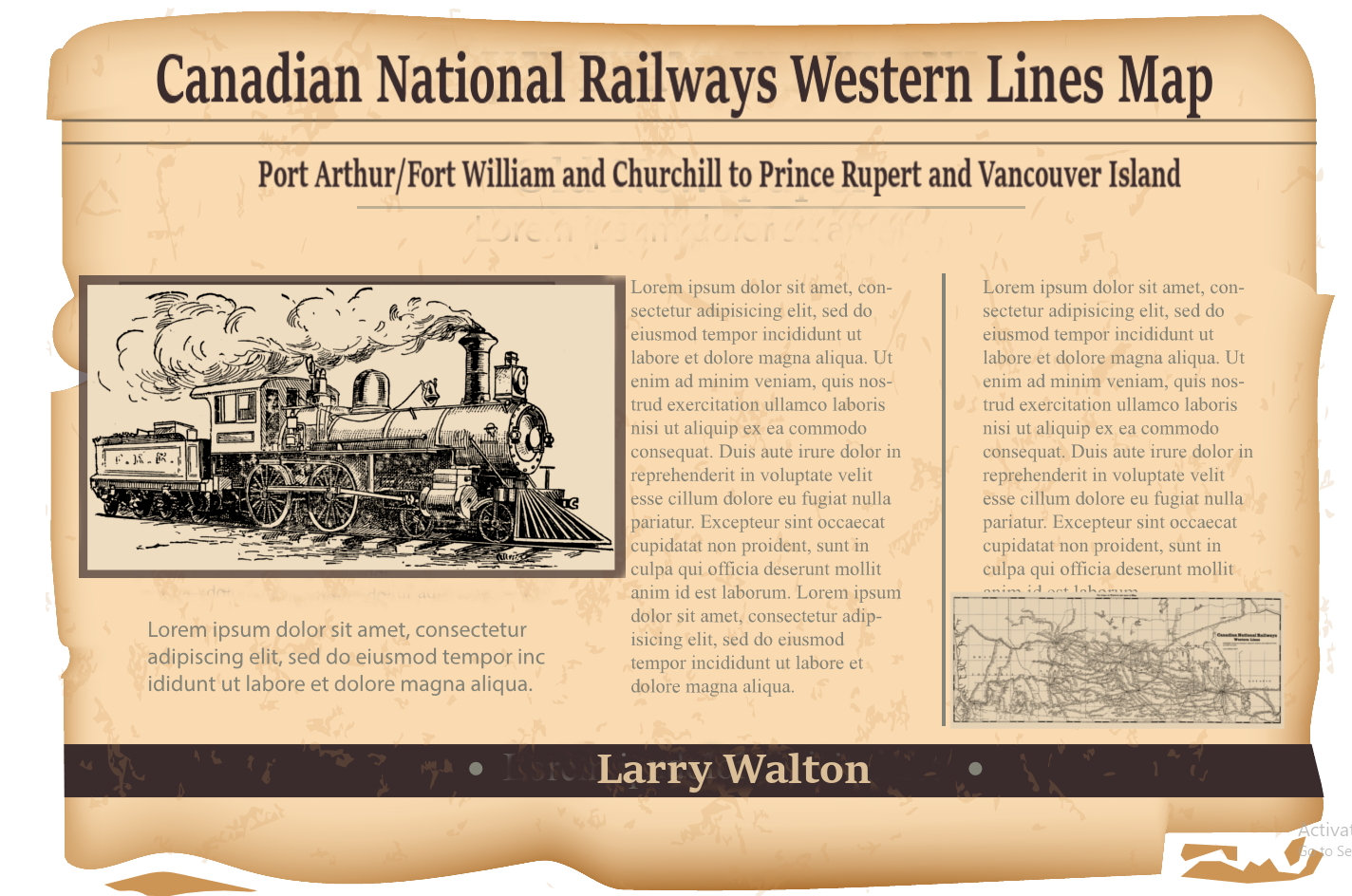
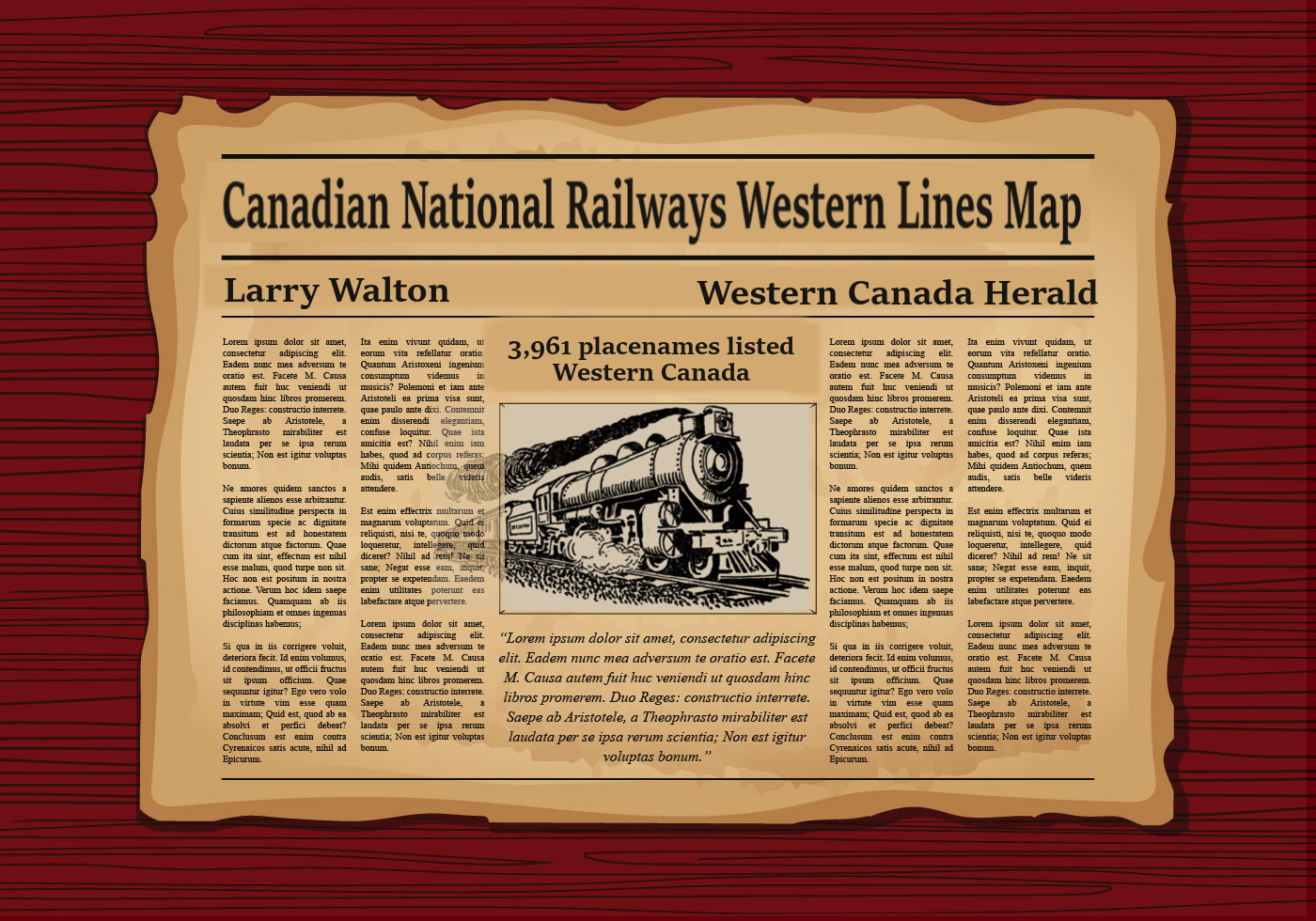
Roderickville appears on Larry Walton's Canadian National Railways Western Lines Map a part of the Online Historical Map Digitization Project and Roderickville also shows up in Geographic Names of Saskatchewan. It then becomes apparent that Roderickville is located just west and south of Swift Current near Rush Lake on the Canadian National Railway. Travelling to Roderickville, now becomes much easier with such bearings. Obtaining a modern Rural Municipality map then provides current roads for the area. The determination of which Rural Municipality needs to be contacted can be derived from one of these maps which will help locate the legal land description, in this case section 20 township 15 range 10 West of the third meridian for Roderickville. This legal land location can be identified by
| Rural Municipality Coulee No. 136 | ||||
| Latitude | Longitude | |||
| 50.273554 | -107.345313 | |||
| 50° 16.413' N | 107° 20.719' W | |||
| 50° 16' 24.79" N | 107° 20' 43.13" W | |||
| Township Road 154 | Range Road 3105 | |||
| MGRS/USNG | UTM | NTS 13U CR 32882 71677 | 13N 332882 5571678 | C-28-C/72-J-6 |
- Braddock 24-13-11-W3 is a nearby Locality 19 kilometers
- Burnham 16-15-11-W3 is a nearby Locality 9 kilometers
- Coulee No. 136 is a nearby Rural Municipality 13 kilometers
- Fauna 16-11-W3 is a nearby Railway Point 16 kilometers
- Hallonquist 25-13-10-W3 is a nearby Hamlet 19 kilometers
- Herbert 17-9-W3 is a nearby Town 19 kilometers
- Neidpath 1-15-10-W3 is a nearby Hamlet l 9 kilometers
- Rush Lake 1-17-11-W3 is a nearby Village 15 kilometers
“I am told there are people who do not care for maps, and I find it hard to believe.” ~ Robert Louis Stevenson
The other method to arrive at Roderickville section 20 township 15 range 10 West of the third meridian would be to use an online legal land converter which determines the latitude and longitude and the GPS bearing for any legal land location. Then plug this number into any GPS system. Ascertaining which localities are close to Roderickville and which Rural Municipality Roderickville is located within, also helps to know which cemeteries are nearby and which local history books are written for the area. Use any library catalogue and type in the rural municipality or larger municipality name. Genealogists may be interested in neighbouring cemeteries to locate an ancestor. In Saskatchewan, a number of the cemeteries are online by a variety of groups, as they are for many countries and provinces across Canada. The Saskatchewan Genealogy Society, for example lists cemeteries by rural municipality.
- Village population of at least 100
- Town population of 500 or more
- City 5,000 residents.
| Horse / Horse and Cart Travel Distances | ||
| Geographic surface | ||
| Level or rolling terrain: | Without a cart | With a loaded cart |
| On Roads / trails | 40 miles/day 64 kilometers/day | 20 miles/day 32 kilometers/day |
| Off-Road (or unkempt trails etc) | ||
| Hilly terrain: | 30 / 51 | 15 / 24 |
| Mountainous terrain: | 20 / 32 | 10 / 16 |
| Level/rolling grasslands: | 30 / 51 | 15 / 24 |
| Hilly grasslands: | 25 / 40 | 12 / 19 |
| Level/rolling forest/thick scrub: | 20 / 32 | 10 / 16 |
| Very hilly forest/thick scrub: | 15 / 24 | 7 / 11 |
| Un-blazed Mountain passes: | 10 / 16 | 5 / 8 |
| Marshland: | 10 / 16 | 5 / 8 |
Local Improvement Districts (LID's) and, Statute Labour and Fire (SLF) Districts improve the local community, establishing cemeteries, honouring war dead, providing health care, roads, bridges. The horse and cart were greatly assisted by the work of the early precursors to the RM and to the Department of Highways and the ensuing Rural Municipality formation. LIDs and SLFs were replaced by Rural Municipalites (RM) following the Spencer Commission findings. Roads were straightened in the 1960s following World War II as more families had access to motorized transport with improved technologies from World War II. When the veterans returned home, society made further improvements. These improvements phased out the need for travel by horse, horse and cart, and ox and buggy. Gradually the extensive railway system saw branch lines closing due to the same phenomena. The one room school house gave way to the consolidated school in town. Families shifted away from the rural farm following the drought and depression in the 1930s seeking economic recovery in the urban centres. The consolidated school also attracted younger families to urban centres and away from living a rural existence.
"First, farms became larger and the rural population declined, so that the sales volume of small-town stores decreased and many businesses ceased to be viable. Second, motor vehicles became more affordable and highways were improved, thereby increasing mobility. Third, this mobility, along with greater disposable income, enabled rural people to purchase goods and services available in higher-order, more distant central places. Fourth, to achieve costs savings, many smaller grain elevators, and public service facilities such as schools and hospitals were replaced by larger ones, at fewer locations. ...A number of small settlements have disappeared." Schlichtmann
Good luck on your journey, and have a lot of fun discovering where once there was a thriving and active community of settlers, which may no longer exist. What can be found today? Does the foundation of a store, or a school district flag pole still remain? Here is another mystery; McMichael near Melfort on Larry Walton's Canadian National Railways Western Lines Map. This placename of McMichael does not appear on contemporary maps, and is not discovered by Bill Barry in his book, so what is known of this placename that has disappeared? Are there any other placenames on historic maps which are not listed at Search Saskatchewan Placenames? Lost places collect placenames without a location, and the Search Saskatchewan Placenames seeks to update its listing with new additions as they are submitted.
Have fun on your genealogical journey discovering what are the neighbouring communities of an ancestral ghost town. By locating a historic settlement it is easier to find resources such as local history books, libraries, museums, historical societies, cemeteries and perhaps a descendant still farming on the "Century Farm" to help discover further information for the family tree. If you are tracking down a historic placename in correspondence or a treasured historic letter, please bear in mind, that pioneers and settlers often referred to their placename where they lived as the name which may be indeed the one room schoolhouse district as it was an integral part of the new community, and settlers gathered together at the school house for meetings, dances, rallies, the Christmas play etc. Julia Adamson ________________________________________________________________________________ Related Posts: Country Roads Leading Home
Where were Saskatchewan homesteads located?
How do I locate my Ancestors Home Town in Saskatchewan?
Locate Your Saskatchewan Place-name
How did pioneers travel to their prairie homesteads?
Maybe the Ghosts Will Live Again! Saskatchewan Ghost Towns… Do you have oral history about a Saskatchewan placename not on a current map? How do you find those communities which were once dotted around the prairie every six miles or so? ________________________________________________________________________________ All rights reserved. Copyright © Julia Adamson All my images and text are protected under international authors copyright laws and Canadian photography laws and may not be downloaded, reproduced, copied, transmitted or manipulated without my written explicit permission. They may be licensed through Getty images. .. Peace and love be with you. Namaste. ________________________________________________________________________________ Follow me on Sask Gen Web, 500 px, Word Press, Facebook, Blogger, Twitter, Tumblr, Live Journal, Flickr, and Flickriver ________________________________________________________________________________
Saturday, 24 October 2015
Little known 1918 battle: Battle of Iwuy
 Niagra Cemetery, Iwuy Military Cemetery.
Little known 1918 battle: Battle of Iwuy
Français | English Mirror Site
| A very worthwhile project has been initiated in the city of Iwuy (population 3,232), department Nord, district of Cambrai (region Nord-Pas-de-Calais), France. Michel Lespagnol, resident of the village hopes to pay tribute to all the people who participated in a little known 1918 battle that freed the village on the anniversary date of "The Battle of Iwuy." Lespagnol, retired now from the Railways, has a love of history becoming an amateur local historian of the area, and is requested by the teachers to help explain the great sacrifices undertaken by military personnel. With supporting documents and field trips, the classroom of youngsters are enriched by the knowledge imparted to them about the war effort. Lespagnol feels deeply about the great time lapse between current generations and the era of the "war to end all wars" and worries that after the interest re-kindled by the 100th anniversary of armistice that the youngest will forget these hard times too quickly. |
Follow on Word Press, Facebook, Blogger, Twitter, Tumblr, 500 px, Flickr, and Flickriver
________________________________________________________________________________

________________________________________________________________________________

Monday, 17 August 2015
Saskatchewan's Health Care Evolution Towards Medicare Part I
Saskatchewan's Health Care Evolution Towards Medicare
Part I
Pioneer Saddle Bag Doctor
" Medical care was practically non-existant in the very early times. Doctors and medicines were scarce and there weren't any hospitals. Home remedies were used and although perhaps good to a certain extent, there were many untimely deaths, especially from communicable diseases such as diptheria, small pox, typhoid and scarlet fever and consumption (T.B.)"Grummett p 17 "Resourcefulness in cases of emergency was fostered in the home of the pioneer on the western plains and home remedies had to be relied upon. Some of the favoured remedies were said to be, by those who spoke from experience, none too pleasant to the palate, but they had great healing power."Storer p. 104
"Doctor's those days had to be entirely dedicated to survive - that is, on the prairies. Often saw him in the dead of winter, in his voluminous coon coat, bundled into his cutter, out to serve humanity in the bleak outlands; rain, shine or blizzard." Greenblat p.19The prairie weather set obstacles for both rural resident and pioneering prairie doctors. "The roads were few and poorly maintained. When it rained, the mud was deep and sticky, often clogging the wheels of the buggy...The winter was the most trying time, especially when blizzards would blow up and continue for a day or two or more. The road would blow over with snow and only here and there could one see the track that had been made. When telephones came in, one would try to see from one pole to the other. If snow got deep on the road, it would be difficult to pass a cutter or sleigh coming from the opposite direction lest you slid off the road and find it very hard to get it back on. During those early days and for many years later, outbreaks of typhoid were very common. ...It was hard to get about in the winter and as telephonic communication was bad or nil, when one got a call to see a serious case, it would be arranged when the next visit was to be made."MacLean p.63
Much is said about the pioneer doctor travels: "Her practice required frequent travelling. For difficult trails or a distance that meant camping and the tending of horses, she always had a driver. On the Reserve, or to settler' homes within a range of ten to twelve miles, she drove Malin; and the doctor and her beautiful pacing mare became known throught the country."Buck p. xvi
The British North America Act of 1867, Sec. 92 set out that the local public health activities should be established and maintained by institutions set up by Provincial Governments. Provisions were set out for medical inspection of school children by medical health officers or public health nurses.StasCan 1939 p. 1027
Typhus fever, diptheria, typhoid, scarlet fever, the Spanish Flue influenza epidemic of 1916, venereal disease (vd), tuberculosis -(consumption)-, polio, accompanied the accidents, gangrene, blizzards, frostbite, broken bones, infections, food poisoning trials and tribulations of the early settlers. To quell the outbreak of contagious disease, Maurice MacDonald Seymour implemented a highly publicized public health campaign, "The Seymour Plan" encouraging cleanliness, and sanitation. Seymour organized the Saskatchewan Medical Association (SMA) in 1905. Between 1885 and 1905, he served with the North-West Territories Medical Council, as either both president and vice-president.
According to Dr. Hugh McLean who practised medicine 1906-1912 a doctor could expect one dollar for an office call, two dollars for a house visit, and fifteen dollars for a confinement case. Additionally a dollar a mile may be added to the bill. In another report, before Medicare, "doctors make house calls and charge $4 to $7 for one. An office visit costs $5 or less. An appendectomy is $125. Removal of a tumour by a neurosurgeon is $350. Complete obstetric service- pre-natal, delivery and post-natal care - $80 for a general practitioner, $100 for a specialist."Cannel July 14, 1962
"In 1909, The Public Health Act created a Bureau of Public Health responsible to the Minister of Municipal Affairs. The Bureau played a largely supervisory role and was replaced by a more powerful Department of Public Health in 1923."Mombourquette. P. 101
Hospitals
A typhoid epidemic struck Medicine Hat in 1888. The Canadian Pacific Railway rallied around its divisional point. A Territorial bill was passed, and fund raising began for a hospital to support the town, the railway workers away from home. By 1890 a facility was raised. By 1910, the voluntary general hospital development days were over, municipalities worked in concert with the provincial government to establish hospitals.Feather
"When the province joined confederation in 1905, there were already voluntary organisations playing a service delivery function. For example, the Victorian Order of Nurses was providing homecare and running hospitals, the Salvation Army was aiding immigrants to settle in the prairies, and find jobs, the Canadian Red Cross was running hospitals, the Women's Christian Temperance Union was providing services to needy people, Yorkton Queen Victoria Hospital was providing inpatient services and the Regina Council of Women was instrumental in establishing other voluntary organizations to provide human services (e.g. Regina Children's Aid Society, Regina YWCA)."DeSantis p. 11 Dr. M. Seymour, as Commissioner of Public Health, he is appointed the first Medical Health Officer (MHO) for Saskatchewan.
Hospitals began in homes, with local nurses or doctors presiding over health care for early communities. On the arrival of the North West Mounted Police, sick bays and police surgeons began to be established at their posts. Alongside early fur trading posts and NWMP posts came missions run by protestant missionaries, Sisters of Charity (Grey Nuns), and Missionary Oblates of Mary Immaculate in Canada. Missionaries would set about establishing schools, dispensaries and hospitals. The Red Cross and Victoria Order of Nurses (VON) were involved with establishing the first hospitals. The 1885 North West Rebellion set up temporary military hospitals at local hospitals or town homes. The Union Hospital Organization was set into place facilitating the construction, and maintenance of hospitals by two or more municipalities. Further, these municipalities which formed the hospital district could enter into an agreement to provide free hospital treatment for certain classes of patients at the cost of the RM.sup>StatsCan 1939 p. 1034
From the late 1800s to about 1950, women in labour could turn to a midwife, a maternity home matron or a doctor for help in delivering a new arrival. Due to vast distances and poor roads and transport by horse and cart or ox and buggy, there was a strong demand for mid wives. Births may be attended to in the home, at a maternity home in the nearby town or village or in a hospital if a city was close by. The fees for the rural doctors (if one was available) were high. Maternity homes sprang up around the province, increasing in number until 1944. "The Mutual Medical and Hospital Benefit Act of 1944 precipitated a hospital building spree."Fung p. 63
Municipal Doctor System
"It was in 1914 that the residents of the village of Holdfast and the surrounding Rural Municipality of Sarnia No. 221 learned that their doctor intended to seek a more financially rewarding locality in which to practice. The news caused such widespread dismay that the municipal council took prompt and drastic but effective steps. A sum of $1500 from property tax revenue was offered as a retainer and Dr. H. J. Schmitt was persuaded to remain in Holdfast."Reid p.7
Manitoba spearheaded the program of "Mother's Allowances" in 1916 to provide assistance to mothers widowed or without any other means of support.CYB 1931 p. 1018 This program spread to other provinces.
The Rural Municipality Act of 1916 was amended to allow municipal doctor arrangements. The Health Services Board was established in the province to oversee these fee for service contracts. Gordon S. Lawson writes of the municipal doctor system which saw the introduction of Medical Services Incorporated MSI schemes in 1955. MSI allowed the patient to choose physicians anywhere in the province, and with better highway and vehicular transportation, rural residents wished access to specialist services available in the urban cities and towns which was not provided for under the municipal doctor plans.
Health Insurance Districts
in 1902, Anderson arrived and set up homesteading near Bulyea. In 1919, he returned to Norway, and "had the opportunity to gather information in regard to social services, particularly health services. I began to wonder why we couldn't adopt a similar plan in Canada with adjustments suitable to our conditions."Anderson p. 43
The Public Health Act was amended in March 1923 wherein the Bureau of Public Health was made a Department of Public Health under a Minister and Deputy Minister appointed by the government. This Department administered the Public Health Act, Vital Statistics Act, Union Hospital Act, an Act to Regulate Public Aid to Hospitals, Venereal Disease Act and the Tuberculosis Sanatoria and Hospitals Act.StatsCan 1927-1928 p. 963-964
As of 1926, Statistics Canada reported that there were 58 general, maternity, and isolation hospitals in the province, two sanitoria for consumptives, 2 hospitals for the insane and 1 home for orphan and refuges. The total number of patients treated at the 58 hospitals were 42,614, staffed by 883 doctors and 254,090 nurses and support staff.StatsCan 1927-28 p. 963-964
In 1927, Matthew S Anderson, Councillor of the Rural Municipality (RM) of McKillop 220 attended the Saskatchewan Association of Rural Municipality (SARM) Convention and proposed a health insurance plan based on the model from his home country - Norway. However SARM delegates could not see the feasibility of the proposal with the taxation scheme afforded to the RMs of that era. These localities were served by thirteen doctors; Holdfast (Rural Municipality of Sarnia No 221), Craik (RM of Craik No. 222 ), Beechy (RM of Victory No 226 ), Bethune (RM of DufferinNo No 190), Birsay (RM Of Coteau No 255), Brock (RM of Kindersley No 290 ), Chamberlain (RM of Sarnia No. 221), Freemont (RM of Hillsdale No. 440), Leroy (RM Of LeRoy No 339), Lintlaw (RM of Hazel Dell No. 335), Rush Lake (RM Of Excelsior No 16), and Senlac (RM of Senlac No. 411.).Houston and Massie. P. 28
Dirty Thirties
Beginning in 1931, special grants were provided by the provincial Relief Medical Services Branch to physicians and hospitals to allow them to proffer services to residents unable to pay for health care. The Bureau of Labour, and Public Welfare and Northern Settlers Branch of the Department of Municipal Affairs receive medical advice from the Relief Medical Services Branch.CYB 1939 p. 1035 'Northern Settlers' were those single transients and transient families who transferred to the northern area of the province seeking better conditions away from the drought area in the southern section of the province.CYB 1941 p. 908In 1931, C. Rufus Rorem reported thirty two municipalities with doctors working under the municipal doctor plan."Twenty had twenty-one full time doctors; twelve other municipalities had part-time agreements with sixteen physicians"
In 1938, the provincial government under Premier William John Patterson, proposed that Anderson set out the health service insurance plan for his RM. Anderson had been reeve since 1930 and a councillor since 1922 and worked towards his goal of Providing a cooperative health system - during the dirty thirties, the finances of the community was desperate, and few to none could afford any health care at all. "The initial tax was $5 per person up to a maximum of $50 per family. The population covered was 2,350."Anderson p. 64 The RM of McKillop, town of Strasbourg, and the two villages of Bulyea and Silton were covered becoming "Health District No. 1"
Municipal and Medical Hospital Services Act or the "Matt Anderson Act"
Matt Anderson in the Rural Municipality of McKillop No 220 instigated the passing of the Municipal and Medical Hospital Services Act (the "Matt Anderson Act") in November 1938 which allowed any group larger than ten persons to incorporate a health insurance plan. From this statute, RMs could supply hospital and medical services to the rural community by levying either a land tax or a personal tax. After this act was passed The RM of Strasbourg and Silton (RM Pittville No, 169) also followed the RM of McKillop No. 220 passing a similar bylaw to take advantage of the new legislation that same year. Anderson travelled to other regions introducing the concept. RM of Caledonia No 99, RM Of Chester No 125, RM of Lajord No 128, RM of Lumsden No 189, RM of Longlaketon No 219 established municipal medical plans by 1941. The RM of Webb No 138 followed by 1943.
The new health care plan met with favourable press, and incited keen interest across the province. The main alteration in health care was that doctors submitted their bills to the municipality rather than to each individual patient. In this way physicians were paid monthly. In 1938, Dr. R. G. Ferguson tallied 546 provincial doctors, of which 121 were under some sort of municipal contract.Houston and Massie p. 33
Commercial insurance companies sprang up providing support for the residents of Saskatchewan in the face of unpredictable medical and hospital care.Taylor p3-4 Doctor sponsored schemes such as Medical Services Incorporated, Saskatoon Medical and Hospital Benefit Association, Regina Mutual Medical Benefit Association, Group Medical Services, were some of the agencies which arose to meet the health care needs in urban and rural areas. These proved invaluable to the residents of Saskatchewan following World War II when the province began restructuring after the war effort and veterans returned home.
In 1941, the Dr. John J. Collins questionnaire received this reply from one of the rural doctors; "Any system is to be preferred to the present. Collections appear hopeless. I do not know how medical men can hope to carry on out here [all year] under present and future conditions."Houston and Massie p. 33
Health Services Board Inquiries
The Saskatchewan Health Services Planning Commission was implemented In 1946, with Dr. Cecil G. Sheps as Acting Chairman, and Dr. Mindel G. Sheps, leader of the commission. Dr. Fred Mott was the chair for the Commission, and he also headed up the "Saskatchewan Health Survey Report" began in 1947 and completed in 1951. Dr. Len Rosenfeld served as Mott's deputy. The Hospital Insurance Act -Saskatchewan Hospital Services Plan (SHSP)- came into effect on January 1, of 1947 which provided Saskatchewan residents with free hospital care in the province. It wouldn't be until November 17, 1961 when the Saskatchewan Medical Care Insurance Act was passed, and the dream of Medicare in the province.
Swift Current Health Region No. 1 - pilot project.
Just as Anderson had done in the area of Bulyea, so too did Burak in the Swift Current Health Region also reach out to settlers in the south western area of the province with success. It was thus that Swift Current Health Region No. 1 was born.
Swift Current Health Region No. 1 and Weyburn Health Region No. 3 offered a complete medical care plan including diagnostic, out patient services, general practitioner and specialist services in addition to the Hospital Services Plan. Swift Current Health Region was chosen as a pilot project due to the financial straits of the settlers, and the fact that there was a distinct lack of doctors practising in the area. The land in this corner of the province had started out in the late 1800s and early 1900s as ranch land -pastures and ranges- in the south western portion of the province, and was converting to agricultural mixed farming with a corresponding rise in the population.
[The Swift Current Plan before Medicare] -For a maximum of $96 per year, paid out of personal and land taxes, even the largest Swift Current region family is totally covered for every medical necessity, from sore throat to hospital stay. There is also a small "utilization fee" to discourage needless medical visits - $1 for office calls, $2 for house calls, $3 for medical service late at night or on Sundays."Cannel Aug 2, 1962.
For 14 years. Swift Current and area residents enjoyed the successful pilot program, physicians "submits his bill for services rendered to the health office in Swift Current which pays him 80 per cent of the fee. ...He makes out better by settling for 80 per cent and frequently comes out with a yearly income of #25,000. 'That is some $7,000 more than the average Saskatchewan doctor elsewhere earns.' "Cannel July 14, 1962.
Go to Part II
Questions:
However, in Canada when medicare was introduced, there was in fact, a 23 day strike against Canadian medicare that made international headlines. In contemporary times, few remember the inauguration of medicare, and the strike in health care service that lasted three weeks, a time during the summer of 1962 not to be critically ill.
This experiences are a reminder of the need to preserve personal memories of these events, especially as those who can remember through these times are now are at least in their sixties.
Please take the time to fill out our online survey; https://eSurv.org?u=Medicare Saskatchewan MediCare & Doctor's Strike - 1962 Survey asking these questions:
What are your memories of the doctor's strike in 1962? Were you working in the medical field at the time?
What are your memories of life before medicare?
Where did you live?
How old were you (teens, twenties, etc.)?
How did you get information (newspapers, radio, TV)?
Was medicare or the strike a topic of conversation at home or work?
Were you or family members concerned about your health during the strike?
Were you covered by a municipal plan, MSI or other insurance?
If you worked in the medical field, what was the attitude of co-workers?
Please Phone or email Marilyn Decker, - - granddaughter of Matthew (Matthias) Anderson if you have any memories or reminiscences you could share.
https://eSurv.org?u=Medicare
Saskatchewan MediCare & Doctor's Strike - 1962 Survey

Appendix
Bibliography
________________________________________________________________________________
Follow on Word Press, Facebook, Blogger, Twitter, Tumblr, 500 px, Flickr, and Flickriver
________________________________________________________________________________
________________________________________________________________________________
Saskatchewan's Health Care Evolution Towards Medicare - Part II
Saskatchewan's Health Care Evolution Towards Medicare
Part II
Tommy Douglas and the CCF
1944, there were now 101 municipal doctors in the province.Houston and Massie p. 34
Dr. Henry E. Sigerist, a professor of Medical History, was appointed as the head of a Health Services Survey Commission (HSSC) on June 15, 1944, and the report was finished October 4 that same year. Dr. Mindel Sheps, (CCF), was appointed secretary of the Sigerist Commission C. Stuart Houston sums up the salient points of the Sigerist Report; "He [Sigerist] recommended establishment of district health regions for preventive medicine, each centred on a district hospital equipped with an x-ray machine, a medical laboratory, and an ambulance. He advocated rural health centres of eight to ten maternity beds, staffed by a registered nurse and one or more municipal doctors. He proposed that the municipal doctor plans should be maintained and developed. He noted that the public must be educated to seek medical advice at the centre, so that doctors would no longer spend a large part of their time driving around the country."Houston: Sigerist Commission By 1950, the province saw 173 municipal doctors practising in the province.Houston and Massie p. 34
The HSPC continued on with C.C. Gibson, Superintendent of the Regina General Hospital; T.H. McLeod government's economic advisor; and Dr. M.C. Sheps. As a result, health regions were created. "The Regional Health Services Branch is responsible for the organization and administration of health regions: six of fourteen potential regions are in operation. Regional Health Boards assisted by advisory committees administer general public health services. Health Districts within the Region are represented on a District Health Council. ... In many districts within the other Regions, a municipal doctor system is in operation. Medical services are provided under a contract between the municipal authority and medical practitioner. ...Hospital care is available to all residents under a compulsory hospital plan, which is financed by an annual tax of $10 for adults and $5 for children, with a $30 family maximum; any further funds needed are provided by the Provincial Treasury."CYB 1951. p. 212 The Saskatchewan Hospitalization Act was passed in legislature on April 4, 1956.
Dr. Noel Doig relates that when he set up a practice in Hawarden, 1957, "the basic payment from the surrounding township of Rosedale for holding office hours in Hawarden would be $100 per month, and the payment from the township of Loreburn for holding two weekly sessions in a satellite office in the village of that name would be $100 per quarter. ...Fees for medical care would be over and above the stipulated contract payments....I'd [Doig] also been able to secure my appointment to the staff of Outlook Hospital, 26 miles away along two gravel high3ways (No. 19 to its junction with No. 15...)"Doig p. 5-6
"The federal government passed the Hospital Insurance and Diagnostic Services Act in 1957, which offered to reimburse, or cost share, one-half of provincial and territorial costs for specified hospital and diagnostic services. This Act provided for publicly administered universal coverage for a specific set of services under uniform terms and conditions."Health Canada
In December of 1959, - the year that the "incidence of paralytic poliomyelitis rose in all provinces to tis highest level since vaccination began" - Premier Tommy Douglas "announced that an advisory planning committee representing the government, the university, the medical profession and the general public would be set up to make representations to the government of medical care." Archer p. 303. J. Walter Erb, health minister announced the names of the Thompson's planning committee in the spring of 1960.
This committee after visiting numerous countries, -Australia, New Zealand, Great Britain, Norway, Sweden, Denmark, and Holland- and examining the structure of doctor sponsored plans submitted their interim report September 25, 1961. November 7, 1961, Tommy Douglas, elected as the leader of the newly formed New Democrat party, stepped down as premier. Woodrow Stanley Lloyd of the CCF party, succeeded Douglas as the premier of Saskatchewan. On November 17, 1961, the CCF party passed the Saskatchewan Medical Care Insurance Act. On November 21, 1961, this same government appointed William Gwynne Davies {an initiator of the Saskatchewan Federation of Labour (SFL)} as Minister of Public Health.
In 1961, Statistics Canada reported that public medical care programs are existant for three provinces. Saskatchewan locally operated municipal-doctor programs cover about 158,000 persons, and Manitoba covers about 28,000. "The Swift Current Health Region operates a comprehensive prepaid medical-dental and out-patient hospital care scheme for about 53,000 persons. These latter programs are subsidized to some extent by provincial health departments."SYB 1961 p. 236
Provincial Medical Care and Doctor's Strike
Before Medical Care locally operated municipal doctor programs in receipt of provincial grants served the population. "Since July 1962, every person who has resided in the Province of Saskatchewan for three months...and has paid...and premium he is required to pay under the Saskatchewan Medical Care Act, is entitled to have payment made on his behalf from the Saskatchewan Medical Care Insurance Fund, for medical, surgical and obstetrical care, without limit, in the office, home or hospital, from his physician of choice...Physicians providing insured medical services may elect to receive payment in a number of ways:
- they may contract for a salary...
- they may choose to receive direct payment from the administering public agency, the Medical Insurance Commission...
- they may bill their patients directly, the patient in turn being paid by the Commission, on presentation of an itemized account (bill) or receipt...
- the physician my practice for private fees, whereby the patient assumes all responsibility for payment of the doctor's fee...."CYB 1963-1964 p. 273
"Municipal doctor plans formerly operating in Saskatchewan were discontinued with the introduction of the province-wide medical insurance program, but arrangements were being completed in the spring of 1963 to continue, under local auspices, insured medical services for some 57,000 residents of the Swift Current Health Region which as operated a prepaid medical-dental program for nearly 17 years." CYB 1963-1964 p. 275
"The Saskatchewan medical care insurance program is financed from personal premiums plus general revenue contributions. No premiums were levied in respect of 1962, but an annual premium of $12 per adult or a maximum annual premium of $24 per family has been levied for 1963 for medical care coverage. Special corporation and personal income taxes have been introduced...along with the use of a portion of revenues from a 5-p.c. retail sales tax."CYB 1963-1964 p. 275
In Conclusion
The federal government stepped in with funding in 1968 to support medical insurance. Leonard Shifrin noted that 8 provinces of Canada modelled health care upon Saskatchewan's medicare plan by 1979 and the CBC states the entire nation was covered by a medicare plan within ten years of the Saskatchewan Doctor's strike. Saskatchewan's motto; "Multis E Gentibus Vires", Latin for "In Many People's Strength" represents the great cooperative community spirit, which when combined with "the right person in the right place at the right time" paved the way for Saskatchewan to become a leader in medicare.Houston and Massie p. 143
In closing, this brief encapsulation offers an overview of the evolution of health care in Saskatchewan. It is hoped that it may inspire you to reflect on the politics, the health care services, and the effect the various health care systems had on the communities. Please be inspired to comment, compare or contrast how health care impacted their own life experiences. Though this review does not include medical breakthroughs, or technological inventions, nor does it contain the emotions - the hopes and fears - however it does review the history of key events, and some of the key people behind formal legislation paving the way towards medicare. As we are collecting information, comments, feedback, and any reminiscences you may have are greatly appreciated.
Questions:
However, in Canada when medicare was introduced, there was in fact, a 23 day strike against Canadian medicare that made international headlines. In contemporary times, few remember the inauguration of medicare, and the strike in health care service that lasted three weeks, a time during the summer of 1962 not to be critically ill.
This experiences are a reminder of the need to preserve personal memories of these events, especially as those who can remember through these times are now are at least in their sixties.
Please take the time to fill out our online survey; https://eSurv.org?u=Medicare Saskatchewan MediCare & Doctor's Strike - 1962 Survey asking these questions:
What are your memories of the doctor's strike in 1962? Were you working in the medical field at the time?
What are your memories of life before medicare?
Where did you live?
How old were you (teens, twenties, etc.)?
How did you get information (newspapers, radio, TV)?
Was medicare or the strike a topic of conversation at home or work?
Were you or family members concerned about your health during the strike?
Were you covered by a municipal plan, MSI or other insurance?
If you worked in the medical field, what was the attitude of co-workers?
Please Phone or email Marilyn Decker, - - granddaughter of Matthew (Matthias) Anderson if you have any memories or reminiscences you could share.
https://eSurv.org?u=Medicare
Saskatchewan MediCare & Doctor's Strike - 1962 Survey
Appendix
Bibliography
Return to Part I ________________________________________________________________________________
Follow on Word Press, Facebook, Blogger, Twitter, Tumblr, 500 px, Flickr, and Flickriver
________________________________________________________________________________
________________________________________________________________________________
Tuesday, 14 July 2015
Will these World War One Medals Make Their Way Home?
Will These World War I War Medals Make Their Way Home?
Can you help?
 The British War Medal World War I.
.....Peter Willcock began a search to locate the descendants of a World War I veteran in the hopes to restore the war medals to the John Bryson's family ancestors. Beginning in Ontario, this mystery unravels with ancestral clues found overseas in Scotland, and continues with a search for descendants in Western Canada - Saskatchewan and Manitoba. It is hoped that the family of John Bryson can be located.
.....Willcock is helping a friend to track down the family. "When my friend was a boy, his family moved into a a rental house in what today is the Toronto area. That's probably about 50 years ago now. There was a pile of junk in the basement which his mother asked him to clean out. In the process he found this WW1 medal, and he kept it all these years until maybe 5-6 years ago when he tried to start looking for some family member or descendant who might like to have the medal."
.....Willcock came to his friend's assistance as he had a computer whereas, his friend was not online. In the course of their online research they have delved into quite a lot of information. They feel that they may have possibly identified grand nieces or nephews in Scotland.
John Bryson
.....The veteran's name is "John Bryson; Regimental Number 105984;" who resided on a farm in Indian Head, Saskatchewan in the year 1921. He was single, and aged 38. He was born Eaglesham, Renfrewshire, Scotland in October 31, 1883. He reported an address of Palmer House, Regina, Saskatchewan when he enlisted April 4, 1916. James Bryson, of Cambuslang, Lanarkshire, Scotland was given as his next of kin - his father. John's employment was recorded as teamster. A "teamster" originally "referred to a person who drove a team of draft animals, usually a wagon drawn by oxen, horses, or mules."

.....In the book, Indian Head : history of Indian Head and district on page 165, the local history book committee state that James Bryson was wounded in World War I, and no other "Bryson" are listed in the World War I honour roll. There is another Bryson mentioned in the book, however, that of Jean Bryson who married James Harvey Francis (1859 Pakenham, Ontario-), namesake of the town of Francis. Miss Jean Craig Bryson (Mrs. Jean Francis) was the daughter of the Honourable Senator George Bryson of Fort Coulonge, Quebec, and together they had a son, Jonathon Francis. George Bryson, Sr. was the son of James Bryson and Jane Cochrane and arrived in 1814 to Ramsay, Lanark, Ontario. George married Robina Cobb in 1845, and had seven children - two of whom were George Bryson Junior, and Thomas Bryson. However, this book makes no mention of John Bryson at all, unless he went by a nick name of James Bryson. Nor is there any evidence that John Bryson was related to the aforementioned Jean Bryson and the notable Bryson figures from Quebec.
.....
Alexander Sr. Bryson (Sandy)
.....It is believed that Alexander Sr. Bryson (Sandy) was John's uncle, and that Alexander lived in Sintaluta, Saskatchewan. Alexander (1869-Sept 21, 1958) was born 1869 in Eaglesham, Scotland, and had five children after he married Jeanie Moffat (1867-1920). Sandy arrived in 1911, and his family followed in 1912. He lived on township 17 range 11 west of the second meridian. His children were (William) James (1893 - 1933), Alex Jr. (1895-1916 threshing accident), John (Jack) (1897- ), Tom (1900- ), and a daughter Jeanie aged 12 on the 1916 census. Jean went on to marry Mr. Boyd and reside in Vantage, Saskatchewan. Jack and Thomas themselves, relocated to Winnipeg, Manitoba according to page 338 of the book, Sintaluta 1880-1984 / Tales of the Red Fox: Assiniboine Reserve, Town of Sintaluta, Districts of Allindale, Durham, Blackwood, Red Fox, and Spring Coulee.
.....The eldest of the family, listed as William in the local history book, and as James on the Canadian Census, enlisted July 28, 1915, recorded his occupation as a farmer at Sintaluta, and married. James Bryson 115055, lists Cambuslang, Scotland, as his place of birth on his enlistment record and went overseas with the 10th Canadian Mounted Rifles. ....Another brother, Corporal John Bryson 115056, born December 10, 1897, enlisted December 19, 1914, at Shorncliff and states that he is, at the time, an unmarried farmer. His next of kin listed was Alexander Bryson, of Sintaluta, Saskatchewan. He also was born in Cambuslang, Scotland. John was placed with the 10th Canadian Mounted Rifles. ....The youngest brother, SPR Thomas Bryson 2504238, enlisted with a birth date of June 9, 1899, and gave his mother, Jeanie Bryron, of Sintaluta, Saskatchewan as his next of kin. It was a practice for younger men to alter their birth dates in order to enlist and serve their country. Sapper (abbreviated Spr) is the Royal Engineers' equivalent of Private He listed that he was a labourer when he signed up in Winnipeg, Manitoba on June 1, 1918. Tom recorded Glasgow, Scotland as his location of birth. He initially served with Regina Recruits Engineers.

Location
.....According to Map quest Indian Head and Sintaluta are 18 kilometers (11 miles) apart, and both are currently located on the Trans - Canada 1 highway. In the era of horse and buggy or ox and cart this would enable relatives to help one another out during times of harvest. On average, a horse walks at approximately 4 miles per hour (6.5 km/hour) which would make it a three hour journey between Indian Head and Sintaluta. It was common that relatives would homestead and farm near one another to assist with homestead duties and harvest.
.....On an historical railway map of 1925, it can be see that Indian Head and Sintaluta were both on the Canadian Pacific Transcontinental Railway (West). Indian Head, the closer of the two locations to the provincial capital of Regina is 70 kilomters (44 miles) from that city. Indian Head locates at the legal land location of section 24- township 18- range 13-West of the second meridian at Latitude - Longitude (DMS) 50° 32' 1" N, 103° 40' 3" W, and Sintaluta at section 33- township 17 - range 11-West of the 2nd meridian or Latitude - Longitude (DMS) 50° 28' 37" N, 103° 26' 59" W.
.....It is interesting to note that the "The Bryson Maur School Dist No 3312 historical one room school house was located on the SE quarter of section 29 township 24 range 19 W2". Bill Barry gives the spelling of this same school house as Bryn Mawr school 33312 at the same location; SE 29 24 19 W2. Barry attributes the name to a settler from Wales who named it after Brynmawr in Wales, so it is not likely that the first name Bryson Maur had any roots in this Bryson family.
Can you help?
.....It is with heartfelt wishes that some kind reader recognizes the family, and can come forward as an ancestor of John Bryson, the holder of these World War One Medals. Perhaps the The Royal Canadian Legion may be able to help out. They even have a Sintaluta branch, and an Indian Head branch and so they may even know this John Bryson. "Legion members care deeply about supporting the men and women who serve this country and want to make a difference in the lives of Veterans, contribute to our communities, and Remember those who made the ultimate sacrifice for our Country...The Royal Canadian Legion [members] .... make a difference in the lives of Veterans and their families, provide essential services within our communities, and Remember the men and women who made the ultimate sacrifice for our Country."
.....Perhaps the Indian Head townspeople can know of the family and can pinpoint the relations of John Bryson, or similarly, Sintaluta historians may remember the family of Alexander Bryson. In this way, the relatives can contact Willcock. The Winnipeg library or archives may have information about John (Jack) Bryson or Tom Bryson in an Henderson's Directory. The hamlet of or "designated place" of Vantage is considered a ghost town. It may be that the Rural Municipality No. 103 - SUTTON would have information about the residents, and Mrs. Jeanie (nee Bryson) Boyd who took residence there.
..... Trying to identify the family of John Bryson presents a mystery, indeed, to Willcock, and his friend. With a few key details, they are trying to locate the rightful owner of the military medals. By furthering their enquiry online and receiving tips, Willcock searched outside of the province of Ontario. to seek out the rightful owner.
.....In Australia and New Zealand, the Purple Hearts Reunited are groups of researchers have come together to return lost medals to veterans or to their families. With success stories such as lost war medals returned after facebook post, it is hoped, that these war medals, too, may make their way back to John Bryson's ancestors.
.....These precious mementos bestowed upon a Canadian military veteran, would come home at last if they could be restored. Medals "connect recipients to a time in their lives when serving our nation took precedence over all else. " As the centenary of the First World War (1914-1918) is being commemorated and remembered, what fitting tribute, that to find the home of a distinctive, original, valuable, irreplaceable medal. This would provide the family with an ancestral connection to their family member who served, and who fought for our country. The medals themselves, honour the man, John Bryson, and the sacrifices he made for this country of Canada.
Bibliography:
Geographic Names of Saskatchewan Barry, Bill. Centax Books, A Division of PrintWest Communications Ltd. 2005. ISBN 1-897020-19-2
Indian Head: History of Indian Head and District. The History Book Committee Indian Head, Saskatchewan The History Book Committee 1984 ISBN Number 0919781268 / 9780919781269
Sintaluta 1880-1984 / Tales of the Red Fox Assiniboine Reserve, Town of Sintaluta, Districts of Allindale, Durham, Blackwood, Red Fox, and Spring Coulee Published 1985 by Sintaluta & District History Book Committee . ISBN 10 0889254982
Chabun, Will. Mini-mystery surrounds Sask. Veteran's medal. Regina Leader Post. July 28, 2015. Article also appears: Star Phoenix Facebook Star Phoenix
All online sources are embedded in the text of the story as hyper links.
To contribute or add further information, please e-mail
The above web page was created and placed online by author Julia Adamson , and researcher Peter Willcock
Sunday, 24 May 2015
Regina Public Library Prairie History Blog Review
Regina Public Library Prairie History Blog Review
In this day of age with genealogical sites coming online, it is hard to determine which way to turn amidst the plethora of sites appearing from a search engine investigation.The Regina Public Library has come up with a wonderful solution with their Prairie History Blog The blog originated with the purpose of informing their visitors about the new items added to their collection; recommending some of the best online genealogy resources; and notifications of any upcoming genealogy and heritage-related workshops and events in the Regina community or around province.

Regina Public Library Prairie History Blog Card Catalogue
Not only does the Prairie History Blog provide updates about new magazines, and books available in the Prairie History Room, Regina Public Library, but they also have information about recommended websites, their updates and new features. Website with early postcards of Prairie towns is one of these articles.
Enhancing the value of the New Magazines now available, the blog is replete with the article titles in each issue, in a milieu of magazines be it Folklore by the Saskatchewan History and Folklore Society, National Genealogical Society Quarterly, Alberta History, Families, Your Genealogy Today, Manitoba History, Internet Genealogy, Relatively Speaking, Revue Historique, or the Saskatchewan Genealogy Society Bulletin.

New books available for research
As the Regina Public Library system has subscribed to Ancestry Library Edition (ALE) and access is provided in each of their nine branches. The Prairie History Blog provides updates at regular intervals to newly digitised projects which have become available on ALE.
Genealogy presentations are provided in house at the Regina Public Library, but for distance learning or in case you missed it, the many and varied slide shows and transcripts of their presentations are preserved online. A few of these presentations are entitled Revised and Updated Version of Best Genealogy Websites and Tools of 2014 , Tracing your Canadian World War I Ancestors, Best Genealogy Websites 2012 part 2, Researching Military Records. and Chinese footprints across Canada 2014 version.
The Regina Public Library has made their blog a pleasure to use highlighting articles with images, and an easily accessible style providing excellent categories to find similar articles for further research and information. In their passion to provide digital information, they have started the Prairie History Room's New Virtual Scrapbook on the Regina Public Library Flickr page which was launched with over 200 historical photographs. St. Andrew's Thistle Football Club is represented with 22 photos, 18 images provide the scene of the historic Regina Tornado and the Nurses' Training at Regina General Hospital feature amongst historical images of Regina, Regina library events and branches.
The Regina Public History Blog is a wonderful Genealogy and Heritage Newsletter. If you cannot make it into the Regina Public Library in person, please do take time to peruse their virtual presence, where you can be introduced to the Prairie History Collection, find useful information in their Research Guides, view their photo albums, and indulge in the current blog articles and archives
The Regina Public Library blog and Flickr page are also supported by the facebook page and Web Site.

Online Family History Tree Research
enhanced by the Regina Prairie History Blog
Embracing the new millennium, the Regina Public Library has established an informative and insightful virtual presence. Experience their social networking sites and venues the Regina Public Library offers a fantastic online presence. They provide information about new additions to the Prairie History Room Collection, allow genealogists to become aware of the better online genealogy resources available, and on top of this they provide genealogy workshops, and notifications of upcoming genealogical related events in Saskatchewan.
It is not often that one finds a blog as useful and as informative as the Regina Public Library's Prairie History Blog. The Blog shows us just how rich and vibrant the history of Saskatchewan is, and how much the pioneers of this prairie province are treasured in our genealogical research.
+


Subscribe to:
Posts (Atom)